

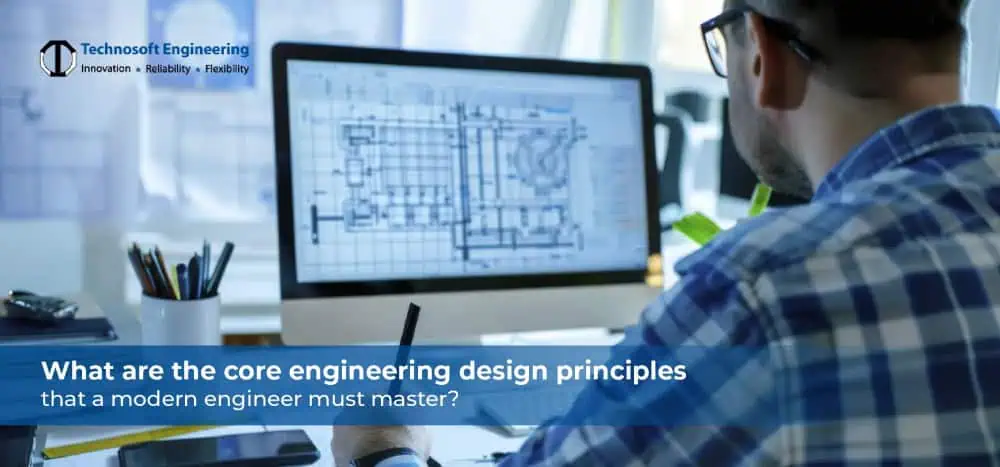
Engineering development and design are reasonably considered to be the real strength and backbone of modern product creation. It comes across as a perfect combination of math, science, and problem-solving to develop the latest solutions to real-world problems.
What is Engineering Design?
Engineering design is a systematic process that transforms ideas into highly functional products by accurately and thoughtfully applying scientific knowledge, creative problem-solving, and engineering expertise. The engineering design is divided into multiple phases, right from problem identification and deep research to concept generation, detailed design, prototyping, and optimization. The primary focus of best practices in engineering is translating design engineering concepts into manufacturable products that precisely meet requirements and satisfy user needs.
The key engineering design principles:
Design for functionality:
The main objective of engineering design is to develop products that perform their intended functions effectively and efficiently. The whole setup requires a detailed analysis of user requirements and project constraints to create solutions that address the specific needs. The engineers must aim to balance diverse technical parameters while ensuring optimal performance. A perfect design engineering example is smart home systems.
Design for safety:
The second important engineering design principle is to design for safety. The core safety considerations must be prioritized in every engineering design. Key inclusions under this parameter are identifying potential hazards and implementing measures to appropriately mitigate risks to users, the environment, and operators. Adherence to evolving safety standards and performing rigorous safety assessments are 100% non-negotiable. The best example in this case is of electric vehicle safety systems.
Design for reliability:
The following vital engineering design rule is to develop products that truly demonstrate dependable, consistent performance for market success and customer satisfaction. The principle is straightforward: to adhere to it, the products must withstand their intended use without premature failure. Here, the engineers need to consider material selection, component durability, and manufacturing processes throughout the design cycle. The perfect example for reliability designing is of aerospace engineering.
Design for manufacturability:
The manufacturability principle puts emphasize on design optimization for cost-effective, efficient production to ensure commercial success. It clearly means that the engineers here need to focus on manufacturing capabilities and constraints during the design phase. The whole exercise ensures a seamless transition from design to production. The perfect example in this case would be consumer electronics production.
Design for sustainability:
The emphasis in this principle is on environmental responsibility. This particular aspect has made sustainability a core engineering principle, meaning that products are designed to have minimal environmental impact throughout their lifecycle, from material selection to end-of-life considerations. Circular economy product design is an ideal example in case of design for sustainability.
What are the key engineering methodologies one must know?
Finite Element Analysis (FEA)
FEA is considered a pivotal computational method in engineering design, simulation, and detailed analysis of structural behavior under diverse conditions.
Computer-Aided Design and Engineering
Current-generation CAE/CAD systems function as integrated design ecosystems, enabling engineers to carry out precise modelling, optimization, and simulation within one environment. Modern CAD systems incorporate parametric modelling, allowing engineers to explore design variations efficiently.
Accelerated prototyping and additive manufacturing:
With the growth of additive manufacturing technologies, prototyping has undergone a significant transformation from a highly time-consuming process to a rapid iteration enabler. These specific technologies enable engineers to validate designs within hours.
AI-assisted design technology:
With the rise of artificial intelligence, we’re seeing a major shift as routine tasks are being automated, optimization opportunities are easier to spot, and AI can even generate fresh design concepts based on specific needs.
Emerging trends in the engineering design:
Generative design and topology optimization:
Generative design is changing the way engineers work. Instead of starting from a blank page, AI now suggests several design options based on the goals and limits your set. Many of these shapes look completely unconventional, but they’re built for maximum performance.
Human-centred design integration:
Another emerging trend in engineering design is the incorporation of human factors and user experience from the project’s inception. This particular approach ensures that the products not only function correctly but also align well with user expectations.
Simulation-driven design:
Modern engineering processes are making a visible shift towards simulation-driven approaches. Under this approach, digital testing guides the design decisions right from the earliest development stages.
Cross-disciplinary integration:
The major boundaries between traditional engineering disciplines are blurred, as all varieties of modern products require expertise from diverse domains.
IOT integration, and edge computing:
In alliance with current trends, the engineering design incorporates connectivity and distributed computing capabilities, further enabling products to function as part of larger systems.
Conclusion!
Design Engineering Process and engineering methodology are highly driven by technological advances and changing market expectations. Moreover, by embracing emerging methods such as generative design, AI-assisted engineering, and digital twins, organizations can develop products that are not only functionally superior but also highly sustainable, user-friendly, and commercially successful.
Contact Technosoft Engineering as your engineering design partner to allow an expert team of engineering design service experts to guide and support you on your dream project.