
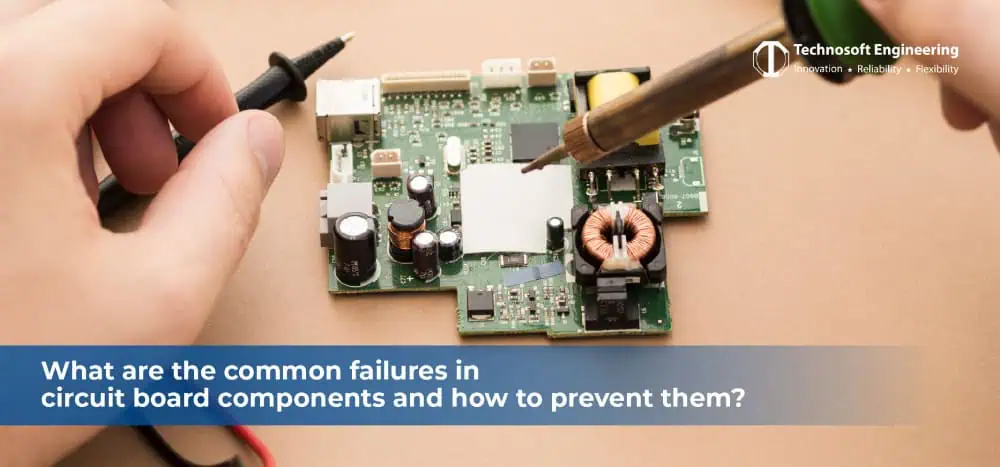
Have you ever opened a broken remote or a computer? If so, you probably saw a green board covered in tiny parts. These boards are the brains of our gadgets. Understanding Circuit Board Components is the first step to knowing how tech works. Whether you are a hobbyist or a student, knowing what is on that board helps you fix things and build new ones.
What are Circuit Board Components?
Simply put, circuit board parts are the physical pieces soldered onto a Printed Circuit Board (PCB). Think of the board like a city. The circuit board anatomy includes the “streets” (copper tracks) and the “buildings” (components). Each part has a specific job. Some store power, while others act like switches. Together, they create a working electronic components board that can run a phone, a car, or a microwave.
Types of Circuit Board Components
For clear PCB component identification, we group everything into seven practical categories. This makes it easy to map each item in your electronic components PCB list to its role using reference designators (like R5 or C12).
1. Passives (R, C, L, FB, Y/X, T)
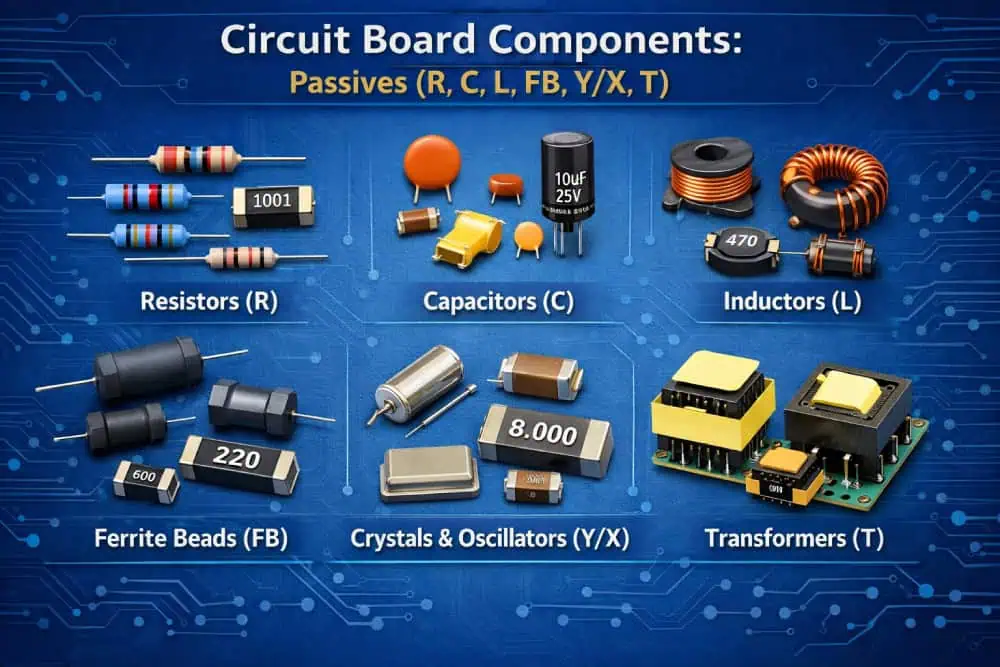
These parts or components do not need any particular power source to work. In all, these control the complete flow of electricity.
- Resistors (R): These limit current.
- Capacitors (C): These store energies briefly.
- Inductors (L) & Ferrite Beads (FB): These help to filter out noise.
- Crystals (Y/X): Provide a heartbeat or timing for the board.
2. Semiconductors (RefDes: D, Q, U/IC)
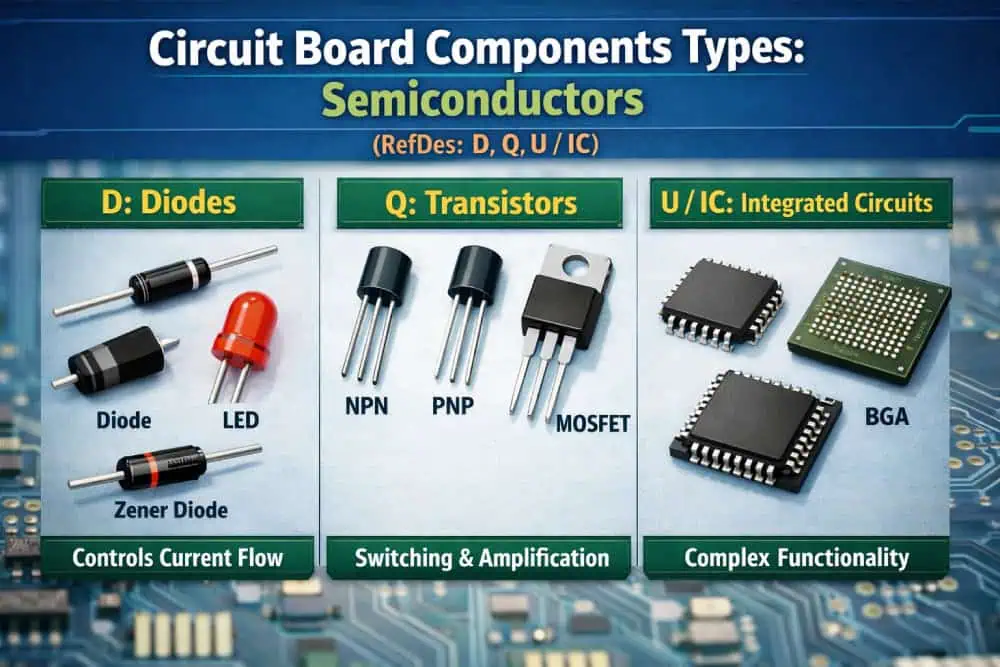
These are the “smart” PCB components.
- Diodes (D): It allows the power to flow in only one direction.
- Transistors (Q): Act as switches or amplifiers.
- Integrated Circuits (U/IC): These are the black chips that contain thousands of tiny components.
3. RF & Antenna
These specific components are known for handling the wireless signals. This includes filters, baluns, and couplers that help your device talk to Wi-Fi or Bluetooth.
4. Interconnect & Electromechanical (RefDes: J/P, SW, K, M)
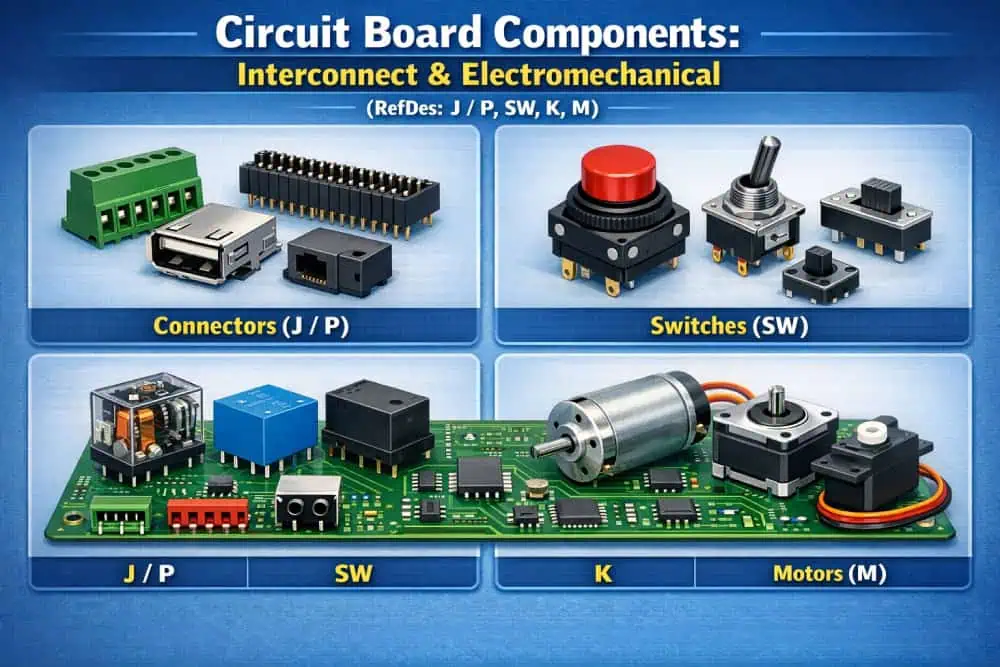
These are the circuit board accessories that connect the board to the outside world.
- Connectors (J/P): Where you plug in wires.
- Switches (SW): These help for manual control.
- Relays (K) & Motors (M): These are the parts that move or click.
5. Protection (RefDes: F, TVS/MOV/GDT)
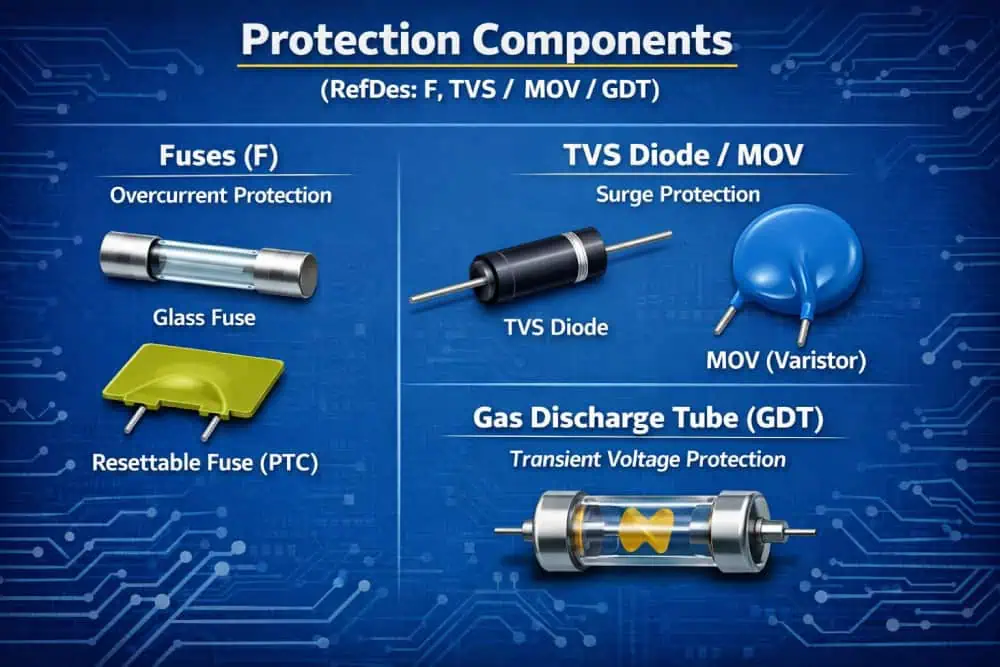
These keep the board safe from power surges. Fuses (F) will “blow” to stop a fire if there is too much power.
6. Sensors & Transducers
These parts feel the world around them. They detect light, heat, or movement and turn it into an electrical signal.
7. The Board Itself (Host Only)
While not “parts” you buy in a bag, the board layers are vital. This includes the stack-up, copper tracks, vias (holes), solder mask (the green coating), and silkscreen (the white text). Mastering the basics of PCB Design ensures these layers work perfectly with the components.
Circuit Board Components Identification
Learning PCB component identification is like learning a new language. You have to look closely at the tiny labels printed on the surface.
How to Read a Labeled Board?
Every component comes with a designated reference designator. For example, if you see “R10,” that is the 10th resistor on the list. The circuit board’s function depends on these parts being in the right spot. Look for the white text (silkscreen) to see where each part belongs.
A Practical Checklist
- Check the part number on top of the black chips.
- Match the RefDes (R, C, U) to the component type.
- Look for polarity marks (like a plus sign or a stripe) so you don’t put parts in backward.
Key Importance of Circuit Board Components
The key reasons for which it is important to only opt for the right computer board components are:
- Reliable Operation: High-quality parts mean the device won’t break next week.
- Efficient Use of Space: Small parts enable thin, light phones.
- Cost-Effectiveness: Using the right part saves money during manufacturing.
- Flexibility: You can change one part to make the board do something new.
- Quality Control: Good parts are easier to test and audit.
Advantages and Disadvantages of Circuit Boards
Using a PCB with fixed PCB components has pros and cons.
Advantages
- Compact Design: You can fit a lot of power in a tiny space.
- Easy Repair: Since parts are labelled, a pro can quickly swap a broken chip.
- High Precision: The machines that build these boards make very few mistakes.
Disadvantages
- Limit Customization: Once a board is made, you can’t easily change the wiring.
- High Initial Investment: It costs a lot of money to design the first board. This is why many companies look for PCB Design Services to get it right the first time.
- Environmental Concerns: Old boards are hard to recycle due to the chemicals used.
Factors to Consider When Choosing Circuit Board Components
When you are picking circuit board parts, don’t just grab the first ones you see. Think about:
- Size: You must estimate closely whether it will fit on your board?
- Power: Can it handle the heat?
- Availability: Is the part in stock, or will it take months to arrive?
- Cost: Does it fit your budget?
Are PCB Components Subject to Ageing?
It is a reality that PCB components tend to get old. Heat is the biggest enemy. Over time, capacitors can dry out, and solder joints can crack. This is why some old electronics stop working even if they look fine. Regular cleaning and keeping devices cool can help them last longer.
How are the components made connected in a PCB?
Parts are connected through traces, which are thin copper paths etched onto the board. To stay in place, parts are “soldered.” This means a lead-tin mix is melted to glue the component to the copper. Good Electrical Design ensures these paths don’t cross and cause a short circuit.
Future Trends in Circuit Board Components
The future of the components board is exciting wherein we are seeing “Flexible PCBs” that can easily bend and fold. Then there is 3D printed electronics, and in future, these components might be even smaller and faster, and made from eco-friendly materials that don’t harm the planet. Understanding the key benefits of PCB design services will be key as these new technologies arrive.
Conclusion
Gaining deep clarity on the circuit board components is the ultimate key to mastering modern tech. Be it regarding a simple resistor or the highly complicated integrated circuit, every part plays a role in the anatomy of a circuit board. By learning how to identify and choose the right PCB components, you can build better, more reliable gadgets.
If you need expert help with your next project, then check out Technosoft Engineering for professional design and engineering support.