
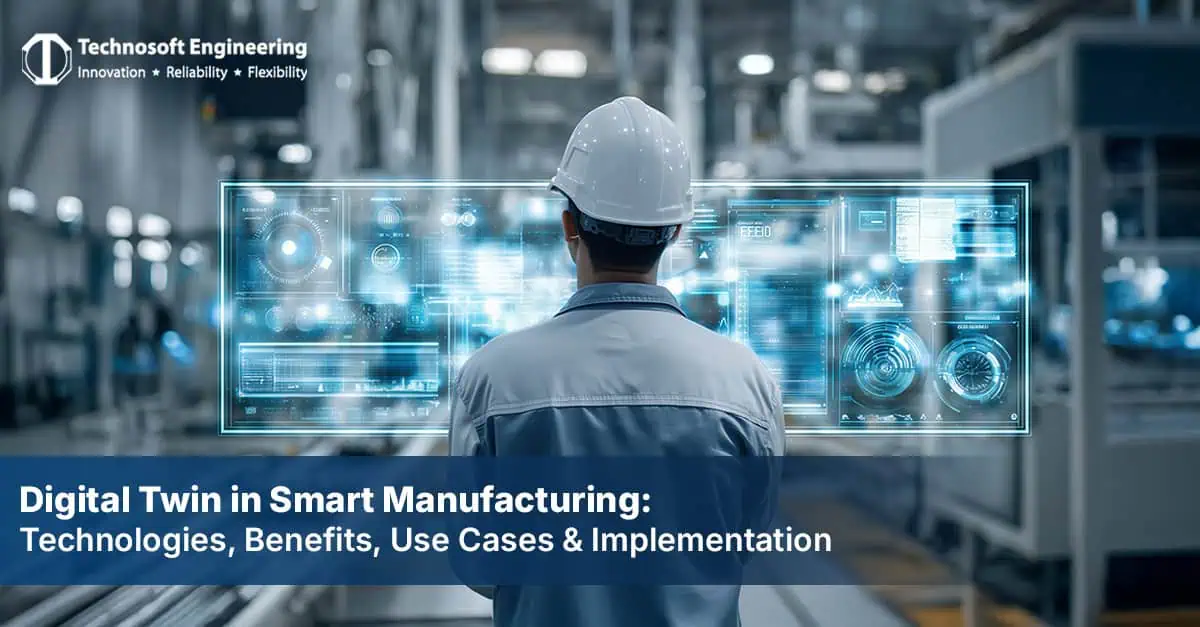
Manufacturing is entering a new era where decisions are driven by real-time intelligence rather than assumptions. As factories become more connected through Industrial IoT, AI, cloud computing, and advanced analytics, Digital Twin technology has emerged as one of the most valuable tools for improving efficiency, quality, and operational resilience.
A digital twin enables manufacturers to create a virtual representation of physical assets, production lines, or entire facilities that continuously updates using live operational data. Instead of waiting for equipment failures or production issues to occur, organizations can monitor performance in real time, simulate changes before implementation, and make informed decisions based on predictive insights.
For manufacturers pursuing Manufacturing Digital Transformation, digital twins provide a foundation for building more connected, agile, and intelligent operations.
What is Digital Twin Technology?
A Digital Twin is a dynamic virtual model of a physical product, machine, process, or manufacturing system. Unlike traditional CAD models or static simulations, it maintains a continuous connection with its physical counterpart through sensors and connected systems.
This constant exchange of information allows the digital twin to reflect the current condition of equipment, analyze performance, identify anomalies, and evaluate future scenarios before changes are made on the factory floor.
The result is a more accurate and data-driven approach to manufacturing operations, reducing uncertainty while improving operational visibility.
How Digital Twin Works in Manufacturing
A successful digital twin combines several technologies into a connected ecosystem.
First, sensors installed on machines collect operational data such as vibration, temperature, energy consumption, pressure, speed, and production output. This information is transmitted through Industrial IoT networks to cloud or edge computing platforms.
The digital twin processes this data using AI, machine learning, and advanced analytics to continuously update the virtual model. Engineers and production managers can then visualize equipment performance, simulate operational changes, predict maintenance needs, and optimize production without interrupting manufacturing operations.
This closed-loop feedback system allows manufacturers to move beyond reactive decision-making toward predictive and proactive operations.
Core Technologies Behind Digital Twin Technology
Digital twins rely on several advanced technologies working together:
- Industrial Internet of Things (IIoT): IoT devices continuously collect machine data from connected equipment.
- Artificial Intelligence (AI): IoT devices continuously collect machine data from connected equipment.
- Machine Learning: Machine learning models improve prediction accuracy as more operational data becomes available.
- Cloud Computing: Cloud platforms provide scalable storage and computing power for digital twin applications.
- Edge Computing: Critical data processing occurs near machines to minimize latency.
- Big Data Analytics: Large volumes of manufacturing data are analyzed to identify trends and improve decision-making.
- CAD and 3D Engineering Models: CAD and engineering models create accurate virtual representations of products and equipment.
- Manufacturing Execution Systems (MES): MES provides real-time production data, enabling Digital Twins to monitor manufacturing processes, track performance, and optimize shop floor operations.
- Enterprise Resource Planning (ERP): ERP integrates production, inventory, procurement, and business operations with Digital Twin technology to improve planning and decision-making.
- SCADA and PLC Integration: SCADA and PLC systems provide real-time machine data, enabling Digital Twins to monitor equipment, optimize processes, and support predictive maintenance.
Together, these technologies create a digital environment capable of monitoring, simulating, and optimizing manufacturing systems in real time.
Benefits of Digital Twin in Manufacturing
Predictive Maintenance
Instead of performing maintenance at fixed intervals, digital twins analyze equipment behavior to identify early signs of failure. This enables maintenance teams to schedule repairs before unexpected breakdowns occur.
Improved Product Quality
Continuous monitoring helps manufacturers detect deviations during production, allowing corrective action before defective products reach customers.
Faster Product Development
Engineering teams can evaluate product designs, manufacturing processes, and production scenarios virtually, reducing reliance on physical prototypes.
Production Optimization
Manufacturers can simulate production schedules, material flow, and equipment utilization to identify bottlenecks and improve throughput.
Lower Operational Costs
Better equipment utilization, reduced downtime, improved quality, and optimized maintenance all contribute to significant cost savings.
Enhanced Sustainability
Digital twins support energy optimization, reduced material waste, and improved resource utilization, helping organizations achieve sustainability goals.
Real-World Use Cases
Digital twins are being adopted across numerous manufacturing applications.
- Predictive Maintenance: Monitor machine health continuously and identify potential failures before they disrupt production.
- Production Line Optimization: Test layout changes, workflow improvements, and scheduling adjustments in a virtual environment.
- Quality Assurance: Analyze process parameters that influence product quality and reduce manufacturing defects.
- Factory Planning: Simulate equipment placement and production flow before installing new machinery.
- Energy Management: Track energy consumption across facilities and identify opportunities to reduce operational costs.
- Supply Chain Visibility: Evaluate inventory movement, supplier performance, and logistics scenarios to improve resilience.
These applications demonstrate how digital twins extend far beyond equipment monitoring and become decision-support tools across the entire manufacturing lifecycle.
Common Challenges
Although digital twin adoption offers significant benefits, implementation requires careful planning.
Manufacturers often face challenges such as integrating legacy equipment, managing large volumes of operational data, ensuring data accuracy, protecting connected systems from cybersecurity threats, and developing the skills needed to manage advanced digital technologies.
Successful projects typically begin with a focused pilot, establish strong data governance, and expand gradually after demonstrating measurable business value.
Best Practices for Implementation
Organizations planning to implement digital twins should:
- Define measurable business objectives before selecting technology.
- Begin with a high-value production asset or process.
- Ensure reliable sensor data and system connectivity.
- Integrate operational systems such as MES, ERP, and SCADA.
- Use AI and analytics to generate actionable recommendations.
- Continuously validate digital models against real-world performance.
- Measure KPIs such as downtime, Overall Equipment Effectiveness (OEE), quality, and maintenance costs before scaling deployment.
The Future of Digital Twin Technology
As Industrial AI, edge computing, 5G connectivity, and automation continue to advance, digital twins are evolving from monitoring tools into intelligent decision-making platforms. Future digital twins will increasingly support autonomous optimization, allowing manufacturing systems to recommend or automatically execute operational improvements while keeping human experts in control.
Digital twins are also expanding beyond individual machines to encompass entire factories and even end-to-end supply chains, enabling organizations to improve resilience, accelerate innovation, and respond more effectively to changing market demands.
Conclusion
Digital Twin technology is transforming the way manufacturers design, operate, and optimize production systems. By connecting physical assets with intelligent virtual models, manufacturers gain real-time visibility, predictive insights, and the ability to test decisions before implementing them in the real world.
As organizations continue their Manufacturing Digital Transformation journey, adopting digital twins is becoming an essential strategy for improving efficiency, reducing costs, increasing product quality, and building future-ready smart factories. Rather than replacing human expertise, digital twins empower engineers and operations teams with the insights needed to make faster, smarter, and more confident decisions.
Frequently Asked Questions (FAQs)
1. What is Digital Twin Technology in manufacturing?
Digital Twin Technology is a virtual representation of a physical product, machine, process, or factory that continuously receives real-time operational data. It enables manufacturers to monitor performance, simulate scenarios, predict failures, and optimize production.
2. What are digital twins used for?
Digital twins are used for predictive maintenance, production planning, product design validation, quality improvement, factory simulation, asset monitoring, energy optimization, and supply chain management.
3. How does a Digital Twin differ from a simulation?
Traditional simulations analyze predefined scenarios using static data. A Digital Twin continuously updates itself using live data from connected equipment, providing real-time visibility and predictive insights throughout the asset lifecycle.
4. What technologies enable Digital Twin solutions?
Digital Twin solutions typically combine:
- Industrial IoT (IIoT)
- Artificial Intelligence (AI)
- Machine Learning
- Cloud Computing
- Edge Computing
- CAD and 3D Modeling
- Big Data Analytics
- PLM, MES, ERP, and SCADA systems
5. Can Digital Twin integrate with existing manufacturing systems?
Yes. Modern Digital Twin platforms can integrate with existing enterprise and operational systems such as ERP, PLM, MES, SCADA, PLCs, Industrial IoT platforms, and cloud applications, allowing manufacturers to leverage existing investments while modernizing their operations.