

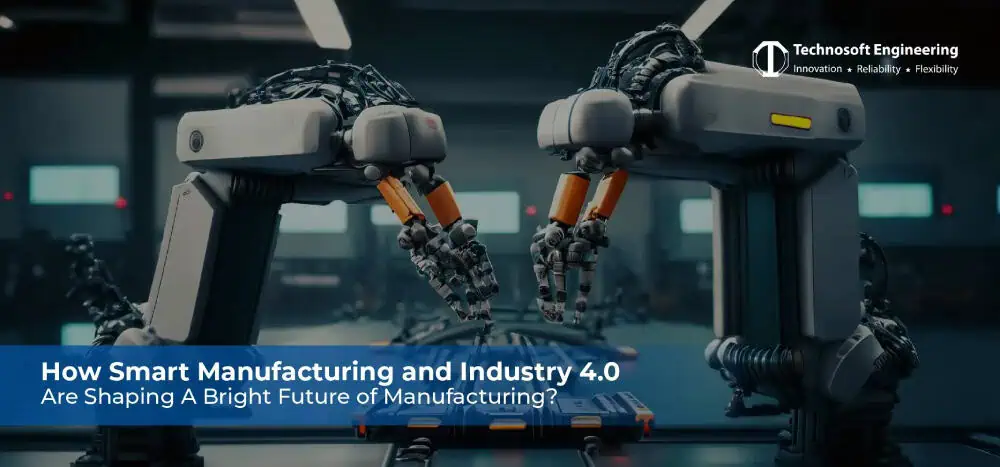
The world of making things is changing fast. We are moving away from old factories and into a world where machines talk to each other. This change is called smart manufacturing and Industry 4.0. It is all about using computers and data to build things faster, better, and with fewer mistakes. By using these new tools, companies can stay ahead of the curve and prepare for what comes next, such as Industry 5.0.
What is Industry 4.0?
Industry 4.0 is the fourth industrial revolution. In the past, we used steam, then electricity, and then basic computers. Now, we are connecting everything to the internet. It is a way to make the entire factory smart by linking every machine and person into a single network.
Key Components of Industry 4.0
To make a smart factory industry 4.0 style, you need a few key pieces:
- Cyber-physical systems (CPS): These are smart machines that can monitor themselves and autonomously make small changes.
- IOT: Commonly known as Internet of Things, IOT efficiently connects all devices and sensors to the web, which allows data sharing in real time.
- Big Data: The advantage of quality information helps managers see patterns they might have missed.
- Artificial Intelligence (AI): AI acts like the “brain,” using data to predict problems before they happen.
Core Principles of Smart Manufacturing
Smart manufacturing solutions rely on four main ideas:
- Interconnectedness: Everything from the supply chain to the finished product—is linked.
- Informed decision-making: Using real facts to choose the best path forward.
- Compliance: The ability to change production quickly if a customer wants something different.
- Enhanced Visibility: It signals the ability to see exactly what is happening on the factory floor at any second.
Real-World Applications and Benefits of Smart Manufacturing
- Predictive Maintenance: Fixing a machine before it breaks to save time and money.
- Quality Control: Using sensors to catch errors instantly during smart production.
- Digital Twins: It signals creation of a virtual map of the factory to test new ideas safely.
Smart Manufacturing vs. Industry 4.0: Synergies and Distinctions
While they sound the same, they have slight differences.
Let’s look at how they are alike:
- Vision and Goal: Both want to use tech to make more products with less effort.
- Core Principles: Both love automation and using data.
- Technologies: Both use IoT, Big Data, and AI as their main tools.
- Benefits: Both help companies become more efficient and flexible.
Smart Manufacturing
- Focus: Improving the specific ways things are made on the floor.
- Scope: Usually stays inside the factory walls.
- Technologies: Focused on advanced robotics and sensors.
- Goals: Maximizing the efficiency of the machines.
Industry 4.0
- Focus: Gives a holistic view of the whole business, from design to shipping.
- Scope: Can span across many different companies and offices.
- Technologies: Uses CPS and cloud computing to link everyone.
- Goals: Creating a smart business world that thinks for itself.
Benefits of Industry 4.0 and Smart Manufacturing Synergy
When these two work together, the results are great:
- Higher efficiency and much less waste.
- Better products that are easier to track.
- Faster innovation to get new items to stores.
- Better use of energy and materials for the planet.
Challenges in Implementing Smart Manufacturing and Industry 4.0
- Security: Keeping data safe from hackers.
- Skills: Finding workers who know how to use high-tech tools.
- Old Systems: Trying to make new tech work with very old machines.
- Cost: The initial setup cost can be very high.
Achieving Smart Manufacturing Efficiency with LineView
LineView helps you get the most out of your machines by offering:
- Real-time tracking: See how your line is doing every second.
- Downtime analysis: Quickly find the “why” behind a stopped machine.
- Easy setup: It works perfectly with the software you already use.
- Custom views: Create a dashboard that shows exactly what you need to know.
Final Verdict
The future of making things is digital. By embracing these smart tools, companies can grow faster and work smarter.
Ready to lead the future of production? Visit Technosoft Engineering to find the perfect engineering support for your next big project.